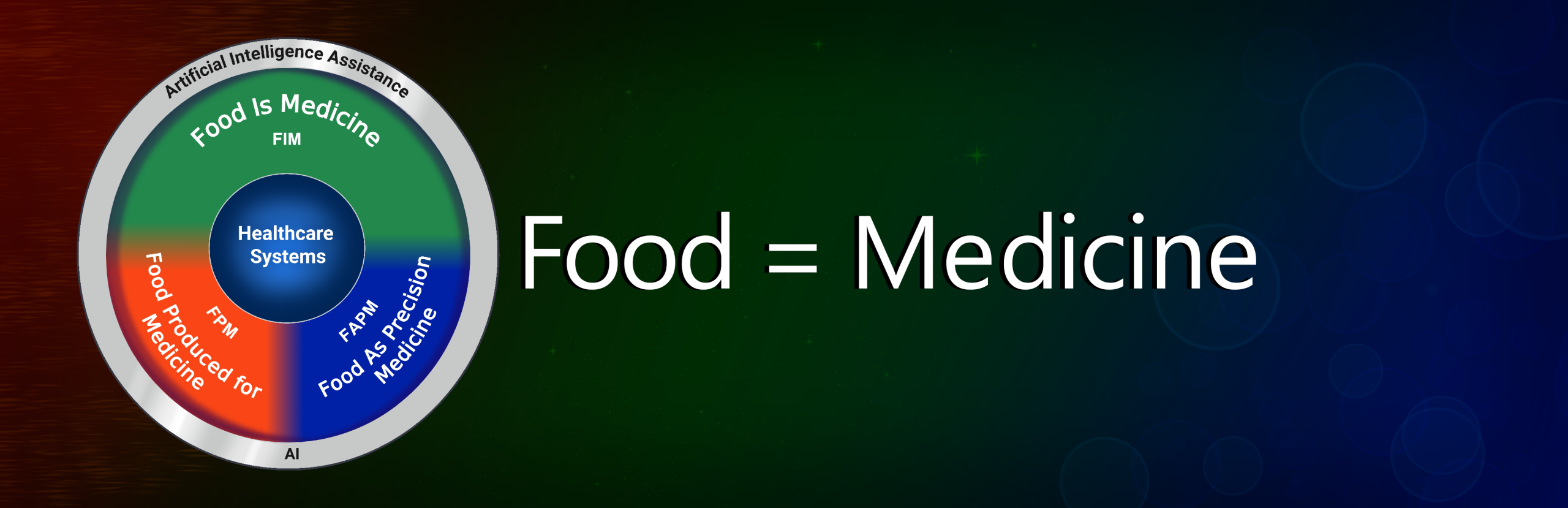
Food = Medicine refers to the research that correlates the effects of food on health and wellbeing. When thinking of food as a prescription rather than just a diet, it can be used to both help manage pre-existing health conditions and prevent future ailments.
 A classic example of prevention are vitamins. By making sure you have vitamin C in your diet from fruits and vegetables, you prevent scurvy.
For helping pre-existing conditions, think of the “heart-healthy” food category (vegetables, fruits, whole grains, and beans) which are good for cardiovascular health.
Food is inherently vital to preventive medicine, management of illness, and curing disease. It is the only source of carbon-based substrates available to the body. Without it, the body wouldn’t be able to form carbohydrates, proteins, fats, or even DNA. It is also the only source of electrons available to the body to create vital metabolic energy. This energy powers the important processes in your body, like breathing, digestion, and movement.
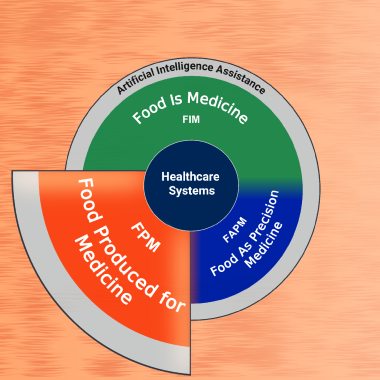
Though, it isn’t just important to understand the overall idea of Food = Medicine, but also the parts that it contains. FPM, FIM, and FAPM are the pillars that make up Food = Medicine. See brief overview of each below and select “Learn More” to go more in depth into the concepts.